

When I was teaching, I had a rule for myself: no rest until the stack was done. The stack was the pile of essays on the corner of the dining room table, and it was never done. I would grade until midnight, sleep badly, teach all day and come home to a new stack. Rest was always one more stack away.
I left the classroom years ago, but I took the rule with me. These days the stack is an inbox, a calendar and a list of manuscripts waiting to be edited. It is still never done. And I still catch myself thinking that I will rest when it is.
Come to me, all you who labor and are heavily burdened, and I will give you rest. Take my yoke upon you, and learn from me, for I am gentle and humble in heart; and you will find rest for your souls. For my yoke is easy, and my burden is light.
Matthew 11:28–30 (WEB)
An invitation, not a prize
Look at who Jesus invites. Not the people who have finished. Not the people who have earned a break. All you who labor and are heavily burdened. He is speaking to people in the middle of it, people still carrying the load.
Advertisement

That is a very different kind of rest from the one I had been chasing. My kind of rest was a reward, something you got at the end if you were good enough and fast enough. His is a gift you receive on the way, from his hand, while the work is still unfinished. It is not the absence of work. It is a different way of carrying it.
That is what the yoke is about. A yoke is not a vacation. It is a piece of farm equipment. But it is shaped to fit, and it is shared. Jesus does not say put everything down. He says take my yoke, walk with me and learn how I carry things.
And notice how he describes himself: gentle and humble in heart. I had always pictured Jesus, if I am honest, as an exacting supervisor, the kind who would look over my stack and find it lacking. He describes himself as the opposite. The one who offers the yoke is not a hard master looking over my shoulder. He is gentle with tired people.
The third morning at the shore
Every summer our family rents a small cottage near the ocean for a week. The first two days I am no use to anyone. I check email. I make lists. I walk on the beach and think about work. Somewhere around the third morning, I wake before everyone else, carry my coffee down to the water and realize I have not thought about the inbox since yesterday.
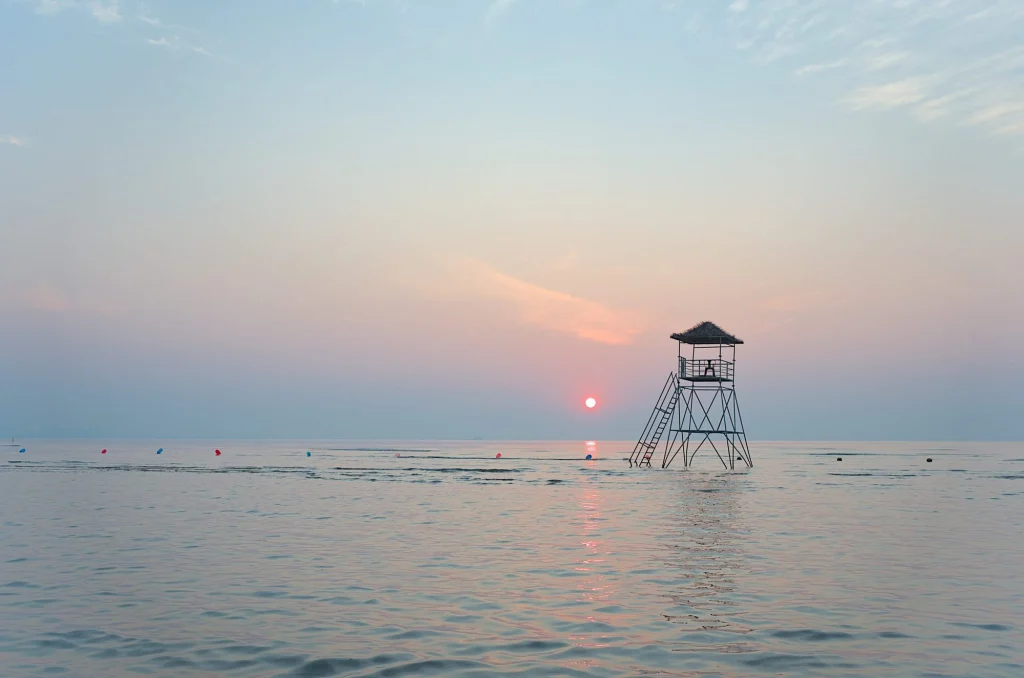
I used to think that third morning was the rest, and the first two days were the price of getting there. I am beginning to think the real problem was that I only let myself rest one week a year, so it took two days just to remember how.
My husband teases me about this every summer. He has a gift for sitting on a porch and doing nothing at all, without apology. For a long time I thought of that as a character flaw. These days I think it may be a kind of faith: the conviction that the world is held together by someone other than him.
Practicing rest before you have earned it
Here are a few small ways I have been trying to take Jesus at his word this summer:
- Stopping work at a set time, even when the stack isn’t done. Especially when it isn’t.
- Keeping one day a week free of email, and letting the world discover that it can wait.
- Opening my Bible before I open my phone, so that the first voice I hear in the morning is his.
- Taking a ten-minute walk in the afternoon with nothing in my ears, just to notice things.
None of these feel like much. That is part of the point. Rest is not something I produce by trying very hard. It is something I receive by coming to him as I am, with the stack still on the table.
Lord Jesus, I am weary and the work is not finished. I am coming to you anyway. Teach me your gentle way of carrying things.