

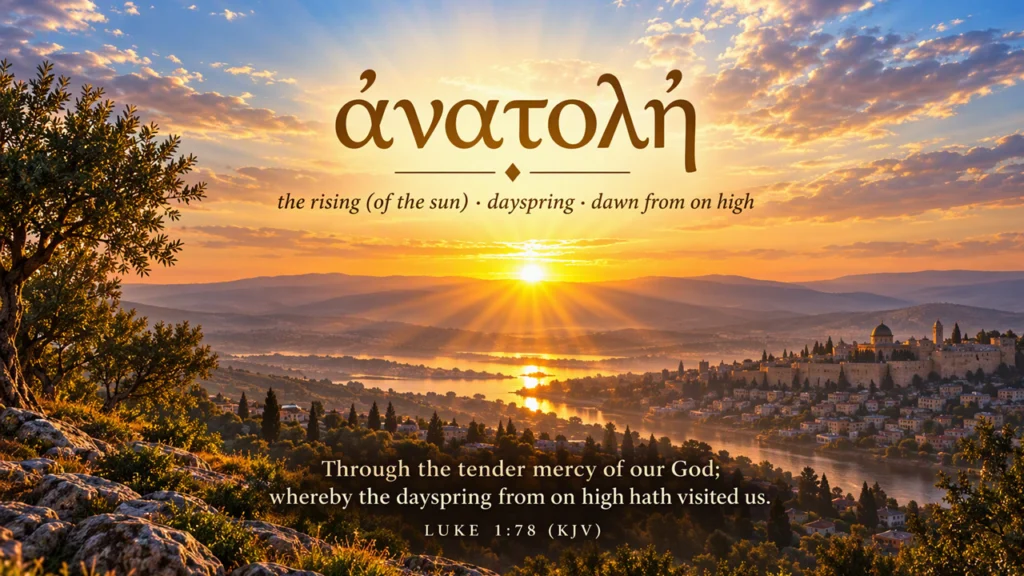
During my time at Houghton College (1973-1977) I sang in a group that left campus on weekends and ministered to area churches. There were ten of us. Four ladies, four guys, a pianist and guitar player, singing what was then “contemporary Christian music”. We were known by the name “Dayspring”. It was a lot of fun and, we think, it was a great opportunity for ministry through music and preaching.
The name Dayspring came about as a result of us looking at Luke 1:76-78, King James Version (hey, if it was good enough for the Apostle Paul it was good enough for us!). It is the song of Zechariah the prophet in the Jerusalem temple upon seeing the Christ child at his dedication. Zechariah addressed Mary, foretelling her anguish, and then turned to address the baby:
And thou, child, shall be called the prophet of the Highest for thou shalt go before the face of the Lord to prepare his ways, to give knowledge of salvation unto his people by the remission of their sins, through the tender mercy of our God, whereby the dayspring from on high hath visited us, to give light to them that sit in darkness and in the shadow of death, to guide our feet into the way of peace.”
Advertisement

As we organized our singing group we thought this sounded like what we wanted to do: to give knowledge of salvation and light to those in darkness, those in the shadow of death and to guide feet into the way of peace.
This memory got me thinking about the connection between the word “Dayspring” and the title of this writing group, “Bright Morning Star”. There’s a connection worth noting.
The Greek word for dayspring, ἀνατολή, literally means “rising” or “sunrise,” symbolizing hope, divine visitation, and the illumination of God’s mercy.
In context, the “Dayspring from on high” refers to Jesus Christ, who brings guidance, peace, and redemption. Older English translations, such as the King James Version, use the term “Dayspring,” while modern translations may render it as “Dawn” or “Rising Sun” to convey the same Messianic imagery
The verse emphasizes this divine light comes because of God’s tender mercy, (something we all need) and highlights both the origin and purpose of Christ’s coming: to shine on those living in darkness and guide them into the path of peace. This imagery connects to other biblical references, such as Malachi 4:2, which speaks of the “sun of righteousness” rising with healing, reinforcing the idea of light overcoming darkness The “Dayspring” thus represents both the literal and spiritual dawn brought by God’s salvation through Jesus.
Both “bright and morning star” and “dayspring from on high” are Messianic titles for Jesus Christ, describing His divine light, redemptive mission, and the dawn of God’s eternal kingdom. In Revelation 22:16 Jesus declares: “I am the root and the offspring of David, and the bright and morning star”. “Bright and morning star” evokes the planet Venus, visible before dawn, heralding the new day. It affirms His divine glory, Messianic authority, and coming return.
Both images identify Jesus as the promised Messiah. “Dayspring” emphasizes His role as the divine light breaking into the world at His first coming, while “bright and morning star” emphasizes His cosmic glory and the heralding of the final, eternal day at His return
Together, they affirm that in Jesus, God’s promised light has risen from on high and will rise again in full glory for His people It tells us what He has done, is doing, and will do.
The next time you spy Venus in the early morning sky, or see the Sun rise, or even turn on a light switch, remember the light of Christ overcomes the darkness in our world. And remember we, too, are a light to the world.
Jim Priest